Christmas
Christmas Tree Farm Marketing Ideas: A Week by Week December Playbook
Christmas tree farms have a six week season. Pre sales, weather contingencies, and capacity management are everything. The complete playbook for running a Christmas tree season at maximum revenue.
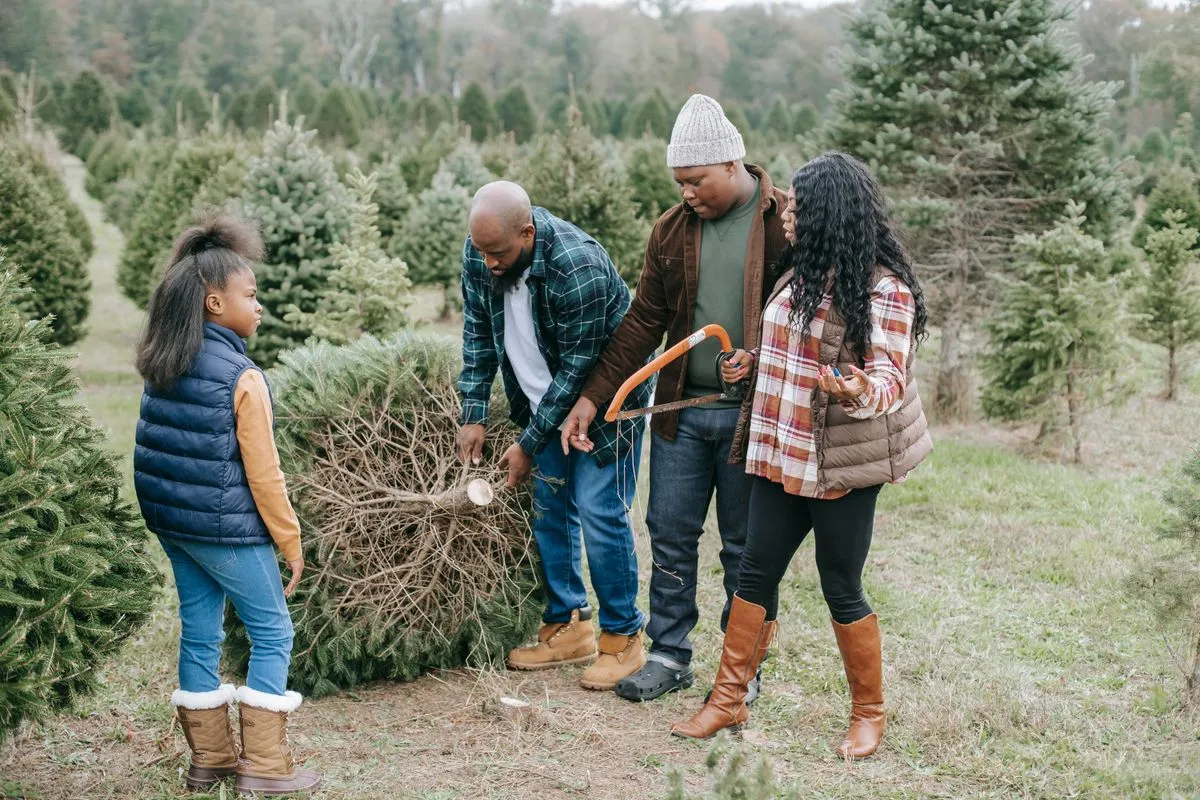
Jenna and I have a soft spot for Christmas tree farms, and we also lose more sleep over them than any other kind of farm we work with. A tree season is six weeks long, give or take. Three peak weekends do most of the work, and a single snowstorm can erase one of them with no makeup date.
Pumpkin patches get eight or nine weekends and can forgive a slow Saturday. Tree farms cannot. Every choice you make in November either protects December or leaves it exposed, which is why we treat tree farm marketing as a playbook with dates on it, not a list of ideas.
If you take one idea from this post, take this one. Black Friday pre-sales carry 30 to 50 percent of season revenue for the tree farms we work with. Open ticket sales Thanksgiving week, pre-sell 40 to 70 percent of each peak weekend with time slot tickets, then spend December protecting the experience instead of chasing walk-up traffic.
Key takeaways
- Launch ticket sales on Black Friday morning. For tree farms, that one weekend can carry 30 to 50 percent of season revenue.
- Pre-sell 40 to 70 percent of each peak weekend with time slot tickets so staffing, parking, and tree inventory stop being guesswork.
- Write your weather closure emails and texts in November, and put a plain refund or transfer policy on the ticket page.
- Sell the cut and load service and a warming bundle inside checkout, not on a sign at the gate.
- Ask for the Google review by text the evening of the visit. Next December is won or lost by this December's stars.
Why a six week season changes the math
A pumpkin patch that loses a Saturday to rain can usually make some of it back the following weekend. October is long enough to absorb a bad day. A tree farm that loses a peak Saturday loses that revenue for good, because nobody buys a Christmas tree in January.
That pressure changes what good marketing looks like. The goal is not more attention in December. The goal is revenue locked in before the gates ever open, so that a storm, a staffing problem, or a slow news weekend cannot take the season down with it.
A tree farm does not get a makeup Saturday. The season ends when December does.
Everything in this playbook flows from that one fact. Pre-sales come first, the on-farm experience comes second, and paid advertising comes a distant third. Most tree farms we meet have that order exactly backwards.
The week by week playbook at a glance
Here is the whole season on one screen. Print it, stick it on the office wall, and check it every Monday morning. The dates shift a little each year depending on where Thanksgiving lands, but the sequence does not.
| Week | Window | What to focus on |
|---|---|---|
| Thanksgiving week | Monday to Thursday | Save the date email, finish the ticket page, test checkout on a phone |
| Black Friday weekend | Friday to Cyber Monday | Launch tickets with a four email sequence and an early bonus for your list |
| Week one | First December weekend | Opening weekend operations, review requests start the same evening |
| Week two | Second December weekend | Peak demand, honest scarcity updates, fill the quiet time slots |
| Week three | Third December weekend | Last big cut weekend, daily inventory updates by email and text |
| Final stretch | December 20 to 24 | Pre-cut trees, wreaths, gift cards, and building next year’s list |
Notice how much of the work happens before a single family walks a row of Fraser firs. Thanksgiving week is quietly the most important week of your year, because it sets up the only marketing day that really moves the needle.
Notice also what is missing: there is no week where the plan is “boost some posts and hope.” Paid ads can support this calendar, but they cannot replace it.
How do you make Black Friday carry the season?
Black Friday matters for tree farms for one simple reason. Families are already in holiday planning mode, sitting on the couch with their phones out. You are borrowing attention that weekend instead of paying for it.
The sequence we run with our tree farm partners is four messages over five days. None of them are complicated, and every one of them can be written in November while things are calm.
- Thanksgiving morning email Subject line like "Save the date, opening weekend is almost here." Share your opening dates, what is new this year, and a soft tease that tickets go live Black Friday at 8 AM.
- Black Friday email at 8 AM Tickets are live. Give your list a modest early bonus, 5 to 10 percent off or a free hot chocolate add on, good for 48 hours only.
- Cyber Monday follow up A second push for families who meant to buy Friday and got busy. Extend the same offer through end of day and say plainly that it ends at midnight.
- Tuesday scarcity update "Opening weekend is now 60 percent sold," but only if it is true. Honest scarcity sells. Invented scarcity gets noticed, and not in a good way.
This works because email to a farm’s own list is absurdly effective. These are families who chose to hear from you, and a tree farm email in late November is something people actually want to open.
The numbers back that up. Here is what we see across the farms whose marketing we run, and why we keep saying the list is the asset.
How much of the season should you pre-sell?
Aim to pre-sell 40 to 70 percent of capacity for each peak weekend. The exact target depends on your parking, your tree inventory, and how much walk-up trade your location naturally draws. Below 40 percent, you are carrying weather risk you do not need to carry.
Pre-selling through TicketSpice does three jobs at once. It smooths the demand curve so you know how to staff and how many trees to have netted and ready. It locks in revenue early, because a family that has paid shows up. And it captures contact information, because a walk-up customer leaves with a tree and no record, while a pre-sale customer becomes someone you can invite back next year.
If you want the full setup, including how to structure tiers and when to open each weekend, our pre-season ticket strategy post walks through it step by step.
What we'd do Set a written pre-sale target for each peak weekend before Thanksgiving, then check actual sales against it every Monday morning. If week two is lagging, you still have time to send one more email. If you never set the target, you find out in January.
Do time slots scare families away?
This is the worry we hear most from tree farm owners, usually phrased as “our families like to just show up.” We understand it, and we have watched the opposite play out. Walk-in only farms hit chaos within an hour of opening on a peak Saturday. Parking fills, lines form, and the experience the family drove forty minutes for turns into a wait.
Time slots fix this quietly. Families book a 60 or 90 minute arrival window, the flow stays steady all day, and the farm feels calm even at full capacity. Nobody’s favorite Christmas memory involves an hour in a parking line.
In practice, families are not buying flexibility. They are buying certainty that the visit will feel magical, and a timed ticket is proof you have thought about their afternoon. Make the ticket page look and feel like your farm while you are at it, because branded ticket pages convert 10 to 30 percent better than generic ones across the farms we run.

What happens when weather wipes out a peak Saturday?
Bad weather is the single biggest threat to a tree farm season. A snowstorm or a sideways rain on the wrong Saturday can take a painful bite out of the year, and you get no say in the schedule. What you do get is the chance to prepare in November.
Start with a clear weather policy written directly on the ticket page. Most farms offer a transfer to another date or a full refund. The specific policy matters less than the plain language, because a family deciding whether to pre-pay wants to know they are not gambling on the forecast.
Watch out Do not wait until a storm is on the radar to write your closure messages. Draft the email and the text in November, leave a blank for the date, and store them where any staff member can hit send. Storm mornings are for moving cars and calling staff, not copywriting.
The third piece is flex capacity. If Saturday cancels, those families need somewhere to land, so hold back a slice of time slots on neighboring days instead of selling every weekend to the rafters. A farm that plans for the bad Saturday loses far less than one that just hopes it stays dry.
Which upsells actually pay?
The biggest revenue per family opportunity on a tree farm is the cut and load service. Families with young kids, older relatives, or one very tired parent are often glad to pay 15 to 30 dollars for someone else to cut the tree, shake it, net it, and tie it to the roof.
Most farms either skip this or mention it on a sign at the gate. The better move is to offer it inside TicketSpice checkout as a clear upgrade, while the family is already in buying mode at the kitchen table. Run your own math here. If one family in four added a 25 dollar service, that would work out to more than 6 dollars per car across every car of the season, with almost no new cost to you.
The second upsell is the warming bundle. A tree visit runs 60 to 90 minutes, and families get cold and hungry. Bundle hot chocolate for four, a couple of donuts, and a bag of marshmallows for the firepit at 25 to 35 dollars, sold as a checkout add on rather than a counter purchase. In our experience the bundle outsells a la carte because the decision happens at home, when it sounds cozy, instead of in a cold line, when it sounds expensive.
Neither of these requires new buildings or new staff. They are configuration work on a ticket page, which is exactly the kind of unglamorous change that quietly pays for the whole season’s marketing.
Reviews decide next December
A tree visit is an annual tradition, which means this year’s experience is next year’s marketing. The family that had a smooth, warm, well organized visit is most of the way to rebooking before they have even untied the tree.
The single best habit is the post visit review request, sent by text the same evening while the kids are still sticky with hot chocolate. Texts reach almost everyone, and a short, personal message with a direct Google link makes leaving a review nearly effortless. We cover the exact wording in our guide to reputation management for farms.
Strong, recent Google reviews make you the obvious choice when a new family searches “Christmas tree farm near me” next November. Thin or stale reviews put you in the maybe pile, and on a six week season, the maybe pile is expensive.
Your next step
This is the same playbook behind our Christmas tree farm marketing work, and none of it requires a big budget. It requires a calendar, a ticket page set up the right way, and messages written before you need them.
If you would like a second set of eyes on your season, we offer a free farm growth review. Jenna and I will look at your ticketing setup, your list, and your December calendar, and tell you plainly where the easy wins are.
Questions farm owners ask us about this
When should a Christmas tree farm start selling tickets?
Open ticket sales on Black Friday morning, with a save the date email going out Thanksgiving morning. Black Friday pre-sales carry 30 to 50 percent of season revenue for the tree farms we work with. Families are already in holiday planning mode that weekend, so the attention is free instead of something you pay for.
How much of a Christmas tree season should be pre-sold?
Aim to pre-sell 40 to 70 percent of capacity for each peak weekend. Anything below 40 percent leaves money on the table and leaves the season exposed to one bad weather day. Pre-sold families also land in your contact list, which is what next year's marketing gets built on.
Do timed entry tickets hurt Christmas tree farm sales?
No, in our experience time slots help sales because families are buying certainty, not flexibility. They know when to arrive, they know parking will not be a mess, and the visit feels calm instead of chaotic. Across the farms we run, branded ticket pages with clear time slots convert 10 to 30 percent better than generic checkout pages.
What should a tree farm do when weather closes a peak Saturday?
Send messages you wrote in November, not ones you draft during the storm. Offer affected families a transfer to another date or a full refund, and state that policy on the ticket page before the season starts. Texts get open rates up to 98 percent, so a morning SMS reaches almost every family before they load the car.